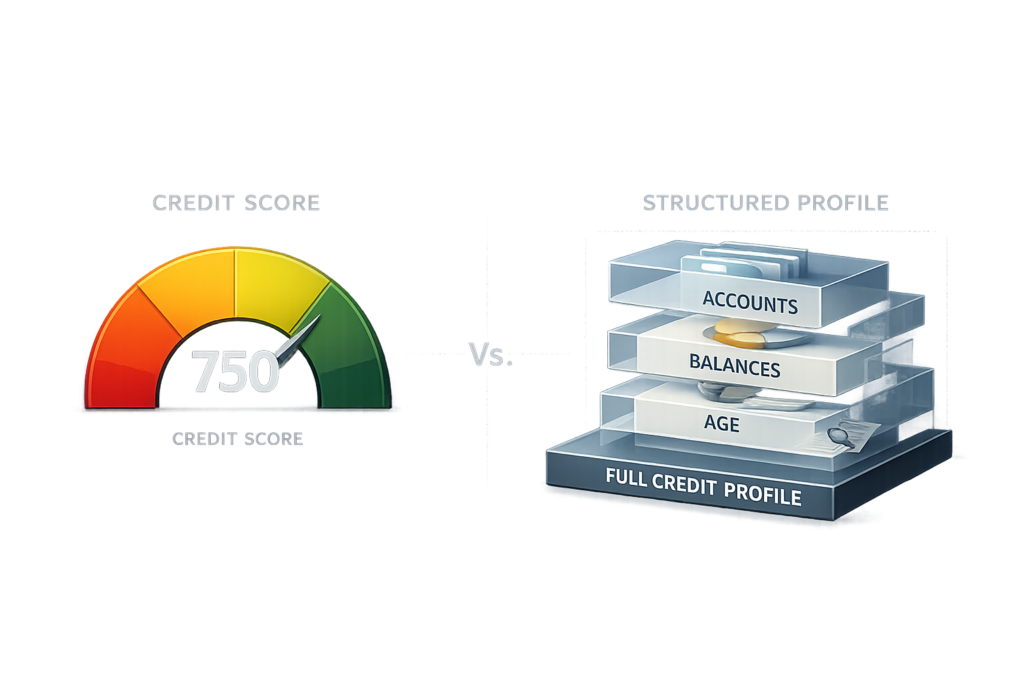
Loan approval decisions are based on structure — not just your score.

Credit Intelligence Lab explains how lending systems evaluate profiles, interpret risk, and determine approval outcomes in plain English.
Loan approval decisions based on credit structure showing full credit profile with accounts, balances, and age compared to a credit score

What Lenders Evaluate

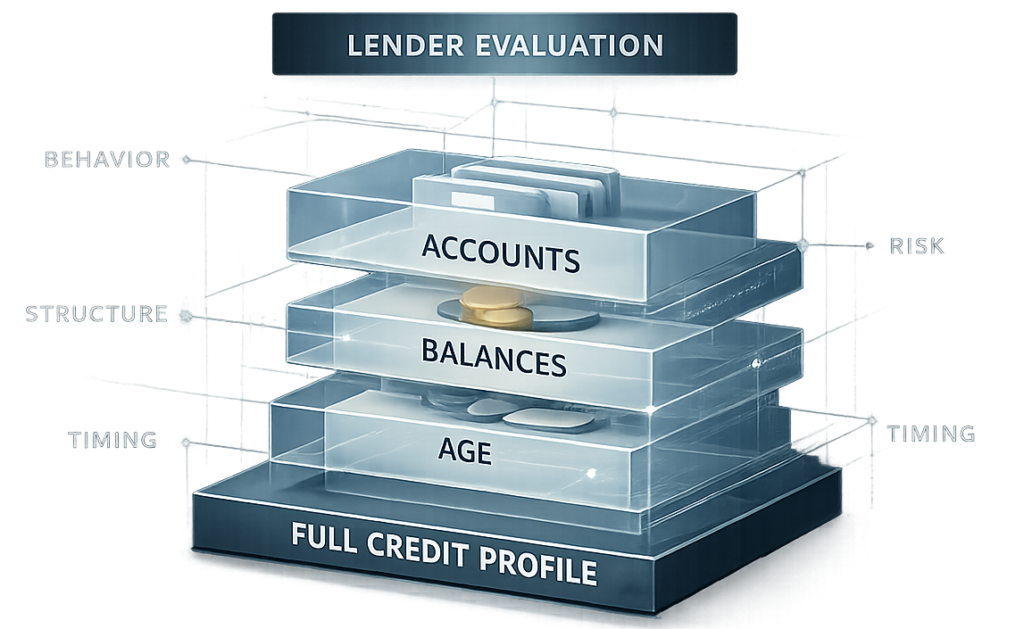
Credit profile layers including accounts, balances, and age evaluated by lenders using behavior, structure, timing, and risk

Most people focus on credit scores. Lenders evaluate the full profile — how accounts are arranged, how behavior forms patterns, how timing affects interpretation, and how risk is measured across the file.

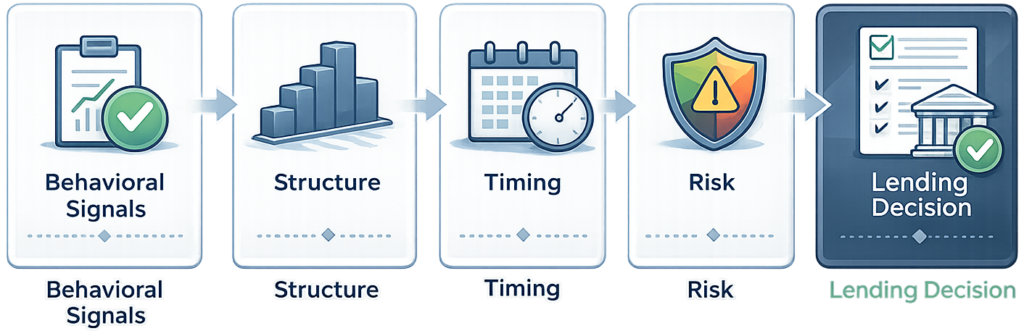
The four layers of financial identity

A structured framework for understanding how approval decisions are made.

Behavioral Signals
How repeated actions are interpreted over time.
Structural Positioning
How accounts are arranged, aged, and distributed.
Timing & Velocity
How quickly and in what sequence changes occur.
Risk Interpretation
How underwriting translates the full profile into approval probability.

Why this matters

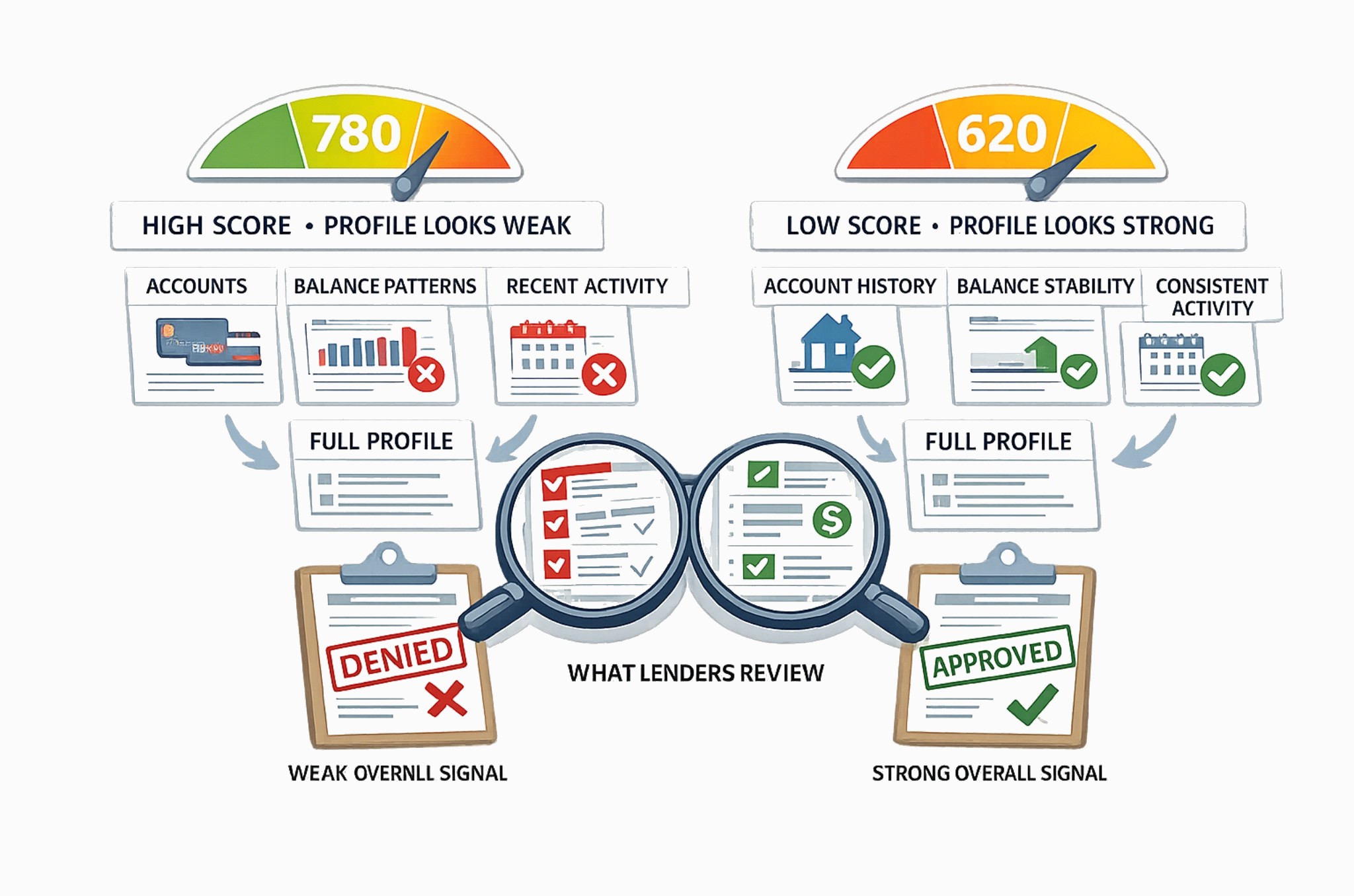
A good score can still lead to a weak approval outcome. A lower score can sometimes be interpreted more favorably than expected. The difference is usually structural. When you understand how lenders read the full profile, decisions make more sense.

Comparison showing how lenders evaluate a full credit profile where a high credit score can still be denied and a lower score can be approved based on overall profile strength

What this platform is

  • Educational credit and lending analysis
  • Underwriting concepts explained in plain English
  • A structured framework for understanding approval decisions
  • A long-form authority platform built for clarity, not hype

What this platform is not

  • Not credit repair marketing
  • Not score manipulation advice
  • Not urgency-based finance content
  • Not a promises-first approval funnel

Start with the core series

The Credit Structure Breakdown series introduces the system step by step so you can understand how behavioral signals, structure, timing, and risk work together inside lending decisions.