Behavioral signals reflect repeated financial actions.
They show how consistently obligations are handled.
They help lenders evaluate whether a profile appears controlled or unstable.
Behavioral signals are the repeated actions lending systems observe over time.
They help determine whether a financial profile appears stable, predictable, and statistically consistent.

Behavioral signals reflect repeated financial actions.
They show how consistently obligations are handled.
They help lenders evaluate whether a profile appears controlled or unstable.

These are some of the recurring behaviors lending systems use to interpret profile stability over time.
Start with repeated actions, not isolated events.
Look for consistency over time.
Then evaluate how those repeated behaviors influence the way the full profile is interpreted.
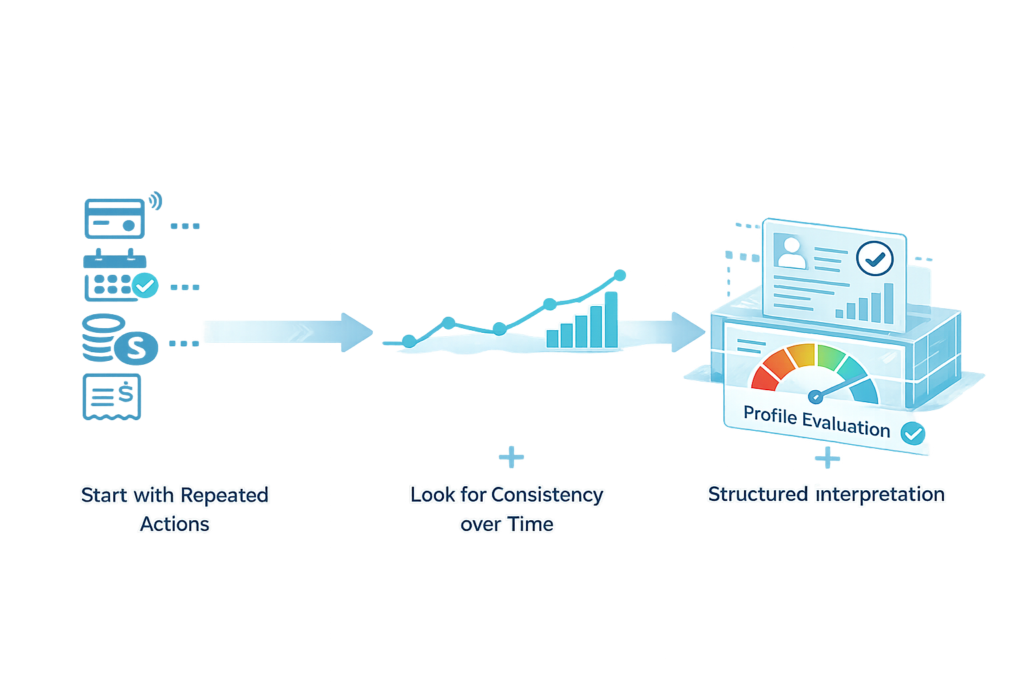
Behavioral signals are often the first pattern layer that begins shaping lender confidence.
They do not work alone.
But they heavily influence whether a profile appears disciplined, reactive, or statistically uncertain.