Layer 2 Overview
Structural Positioning
Structural positioning explains how accounts are arranged across a credit profile. Lending systems evaluate how accounts are distributed, how they relate to each other, and whether the overall structure supports stable interpretation.
This layer introduces how structure changes interpretation, how it connects to behavior and timing, and why arrangement matters in lending decisions.
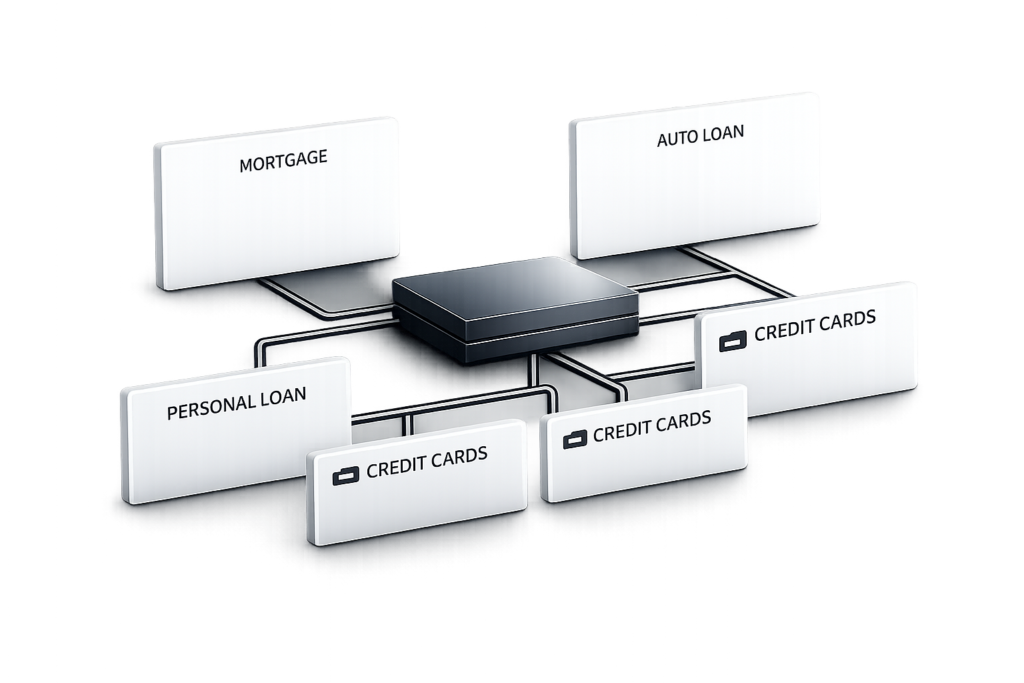
What Structural Positioning Means
Structural positioning refers to how accounts are arranged across a profile. It includes account mix, distribution, depth, and how different account types exist together.
This matters because lending systems evaluate structure as context. The same behavior can be interpreted differently depending on how the profile is built.
How Lending Systems Evaluate Structure
Lenders evaluate structure by reviewing account distribution, file depth, and balance between account types.
Structure changes how the profile is read as a whole and influences how stable or risky it appears.

How Structure Changes Interpretation
Profiles with stronger structure provide more context, making them easier for lenders to interpret with confidence.
Profiles with weaker structure create uncertainty, even when behavior appears consistent.
How Structural Positioning Connects to Other Layers
Behavioral Signals show what happens over time, but structure changes how those behaviors are interpreted.
Timing & Velocity explains when changes occur, while structure provides the context those changes are evaluated within.
Why Structural Positioning Affects Decisions
Structure influences how risk is interpreted. Balanced profiles support stronger interpretation, while uneven profiles create more cautious evaluation.
As profiles move into Risk Interpretation, structure becomes part of how decisions are formed.